Where every ride feels first class
Where every ride feels first class

Choosing a reliable bus charter in San Diego depends on verifying safety records and proper licensing, reviewing customer feedback from previous clients, confirming the fleet includes modern amenities suited to your route, and booking well in advance—especially during San Diego’s peak season from April through June when demand is highest.
Whether you’re coordinating transportation corporate events, arranging event shuttles, or planning a group outing, selecting the right charter operator ensures your group travels comfortably and arrives on time.
Start with the California Public Utilities Commission (PUC) number. Legitimate operators provide this immediately—it’s their license to operate legally in California. If there’s hesitation or they need to “look it up,” that’s your first red flag.
Request their current insurance certificate showing adequate liability coverage. This isn’t over-cautious; it’s protecting your group if something unexpected happens during your trip.
Look into their maintenance protocols and safety record. Well-maintained vehicles matter on any route, and reputable companies don’t hesitate to discuss how they keep their vehicles in top condition. They should also have 24/7 dispatch support with clear backup plans if mechanical issues arise before your departure.
What Types of Vehicles Are Typically Available in San Diego?
Sprinter vans (14 passengers): Best for small groups needing comfortable airport transfers or corporate transportation with leather seating and climate control.
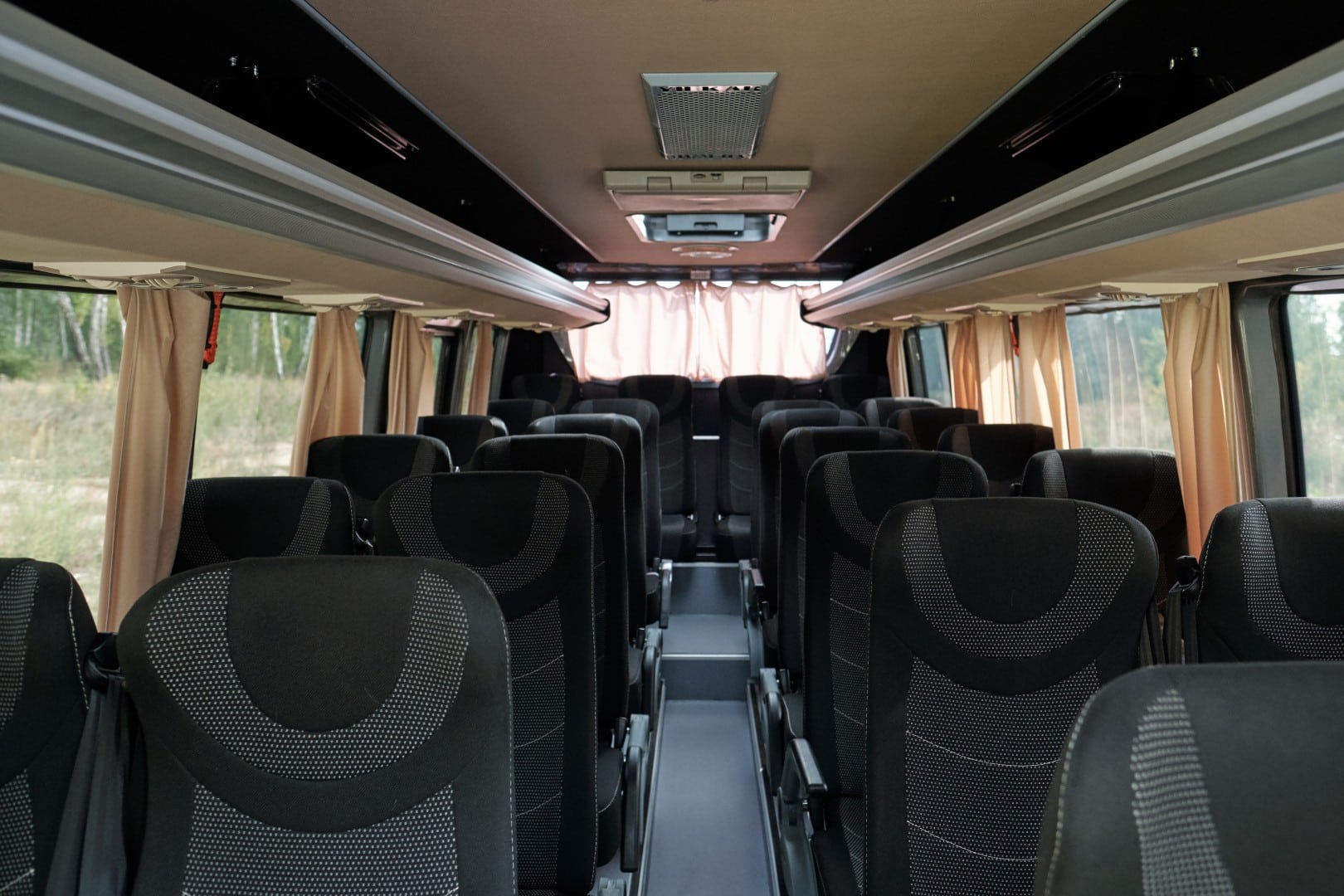
Minibuses(28 passengers): Ideal for medium-sized groups like wedding parties or local tours. Easier to maneuver while offering air conditioning and storage.
Full-size coaches (49-57 passengers): Perfect for large groups and multi-hour journeys with restrooms, Wi-Fi, power outlets, reclining seats, and substantial luggage storage.
Count your actual headcount plus luggage when selecting vehicle size. For trips over two hours—San Diego to LAX, Orange County, or Temecula wine country—a restroom on board is necessary, not optional. Ask to see photos of the actual fleet, not stock images.
San Diego’s peak season demands 3-6 months advance booking. Comic-Con and major summer events make competition even fiercer. Off-peak months offer more flexibility with 2-4 weeks’ notice, though weekends still fill up faster than weekdays.
Provide precise pickup locations, stops, and timing upfront. This prevents unexpected mileage charges and keeps multi-stop events—brewery tours, roadshows, weddings—running smoothly without last-minute confusion.
Multi-day transportation requires planning for driver accommodation and parking permits. Professional operators handle these details but need advance notice for overnight stays or back-to-back early/late service.
If your group is flying through Tijuana via Cross Border Xpress, you need an operator who knows the parking protocols and customs timing. Generic companies often struggle here.
Summer beach traffic and downtown event-day closures require local knowledge. The right operator knows alternative routes and drop-off strategies that keep your schedule on track. Major destinations have particular bus parking rules and time restrictions—make sure your operator knows where they can legally park and how long they can wait.
Choose companies based in San Diego or close by rather than Orange County or LA. Less deadhead time means better schedule reliability and value.
When comparing quotes from multiple firms, make sure you understand what’s included in the price. Some companies provide itemized breakdowns showing base rate, fuel surcharges, tolls, and minimum hours, while others offer all-inclusive pricing with one total figure.
Either approach works as long as you clarify what the price covers. Ask specific questions: Does this include fuel and tolls? Is there a minimum booking period? How is gratuity handled—is it included or expected separately? Are there additional fees for parking, waiting time, or extra stops?
Understanding payment timing matters too. Know when deposits are due and when the final balance gets charged.
When evaluating prices, consider that dramatically lower quotes often signal compromises—older vehicles, less experienced chauffeurs, or unexpected fees that appear later. Balance cost with the reliability and service quality your group deserves.
Standard practice typically involves advance notice requirements—often 14 days for partial refunds, with full charges within 5-7 days of your reservation. Smaller vehicles may have shorter windows.
Get terms in writing before committing any deposit. Also ask what happens if the company needs to cancel—a trustworthy establishment will have backup vehicles or partnerships with other licensed operators to ensure your trip happens.
Check Google Reviews for comprehensive, authentic feedback. Look for patterns—multiple mentions of punctuality, cleanliness, or professionalism carry more weight than individual comments.
Review Yelp for additional perspectives. Read both positive and negative reviews, and notice how they respond to criticism. Don’t rely solely on website testimonials, which are naturally curated.
San Diego’s charter landscape rewards operators with genuine local expertise over generic providers. Companies based in San Diego County understand the logistics that directly affect your event—from seasonal traffic patterns to venue-specific requirements.
When evaluating options, prioritize evidence of local experience, transparent communication, and documented safety standards rather than just competitive pricing. The difference between smooth transportation and logistical headaches often comes down to how well your operator knows San Diego’s unique challenges.
For a reliable bus charter rental in San Diego, look for companies that demonstrate these qualities consistently across their service history.

 (858) 764-4467
 info@mibtransportation.com